

Flexing Our Mental Fitness: What 41,867 Push-Ups Teach Us About Suicide Prevention
Every winter, a peculiar phenomenon takes over offices, gyms, and living rooms across Australia. You’ll see people suddenly drop to the floor to squeeze out a set of ten, twenty, or thirty push-ups.
They are participating in The Push-Up Challenge, a brilliant initiative designed to get us moving, spark vital conversations about mental health, and raise crucial funds for life-saving volunteer organisations like Lifeline.
Here at Armchair Psychology, we’ve been watching the challenge with immense admiration. Today, I want to shine a bright light on a wonderful friend of our clinic, Marc, and his incredible team.
A Massive Effort for a Vital Cause
Marc and his team took on the daunting task of completing 3,307 push-ups per person over a 24-day period. If you’ve ever tried to do even fifty push-ups in a row, you know the physical toll this takes. But the number 3,307 isn’t a random target.
3,307: The devastating number of Australians who lost their lives to suicide in the most recent annual statistics. Every single push-up represented a life cut short, a family shattered, and a community left asking why.
Marc’s team didn’t just meet the challenge; they absolutely smashed it. Together, they performed an astonishing 41,867 push-ups and raised $2,377 to support crisis intervention and mental health services.
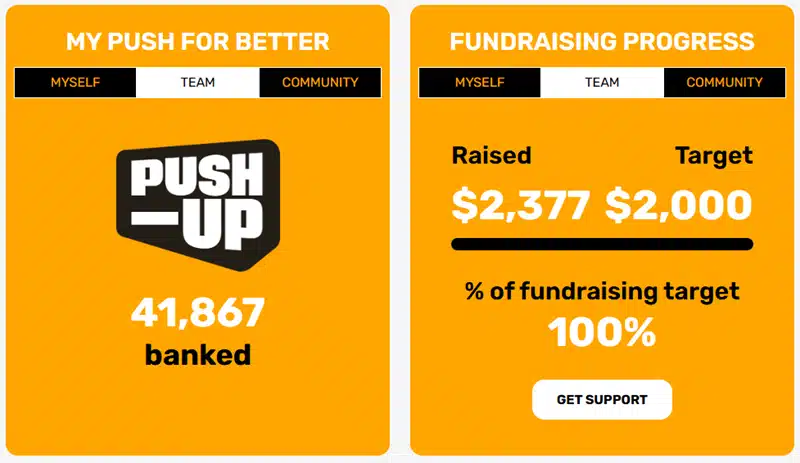
If you’d like to see their incredible tally or add a late contribution to their spectacular effort, you can visit Marc’s Fundraising Page.
When this wonderful event rolls around again next year, I highly encourage you to form a team and join in. Our collective hope, of course, is that when next year’s challenge arrives, the target number will be significantly lower.
The Delicate, Critical Matter of Seeking Help
While the camaraderie, the sweat, and the fundraising are uplifting, the core reason behind the Push-Up Challenge brings us face-to-face with the most delicate and painful topic in my field: suicide.
Over my decades as a psychologist working with adolescents, I have stood alongside far too many families in Sydney’s Eastern Suburbs and beyond, helping them navigate the suffocating, complex grief that follows a suicide. It is a profound privilege to console people in their darkest hours, but it is a role I would give anything to perform less often.
I would infinitely rather sit across from someone before they make that choice.
Suicide is often described as a permanent solution to a temporary circumstance. When an individual is trapped in the deep, dark valley of a mental health crisis, their brain undergoes a sort of cognitive tunnel vision. They cannot see over the horizon. The pain feels permanent, even though feelings by their very nature – are temporary and subject to change.
Finding Your Lifeline Before the Crisis Hardens
If you are carrying a mental load that feels too heavy, or if you are quietly struggling with thoughts of giving up, please hear this: asking for help is not a declaration of defeat; it is an act of profound courage.
You do not have to wait until you are completely broken to reach out. There is an entire network of professionals and volunteers trained to hold the space for you when you cannot hold it for yourself.
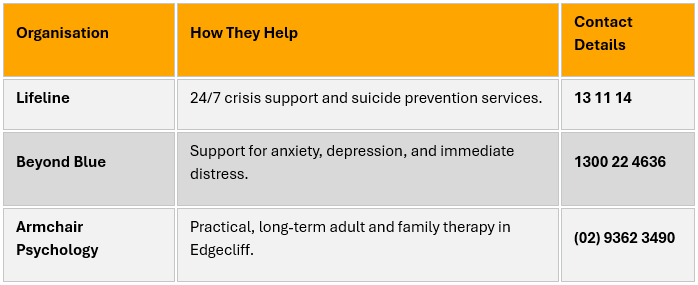
To Marc, his team, and everyone who dropped to the floor this year to raise their heart rates and raise awareness: thank you. You are helping to fund the safety nets that keep our community whole.
Let’s keep talking, keep checking in on our friends, and remember that no matter how dark the night gets, the sun will rise again.
If you’re dealing with mental health challenges, don’t wait; reach out. Contact the Armchair Psychology team to discuss how we might best support you and your family.